
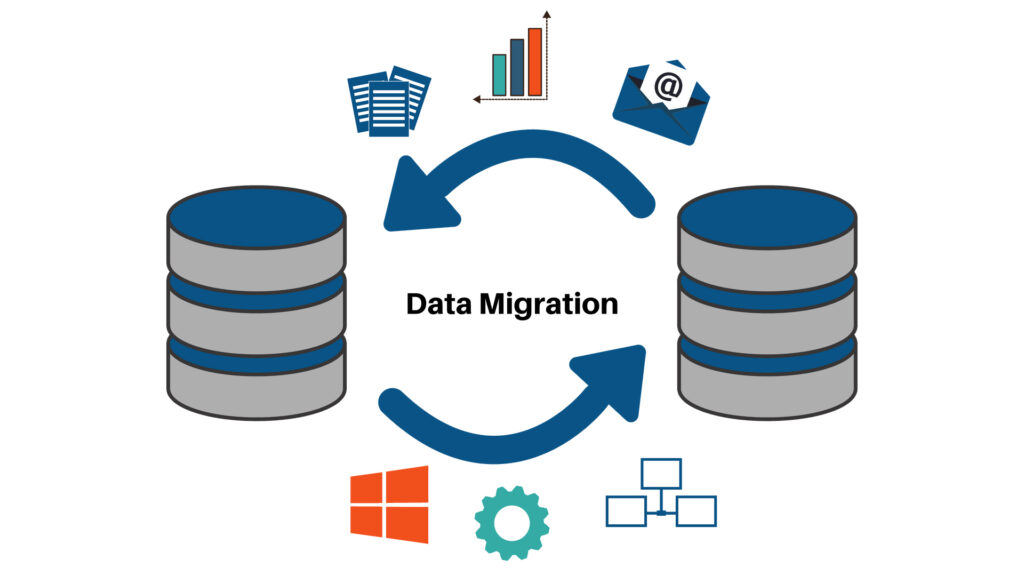
Data migration in technology refers to the process of moving data from one location, system, or format to another. This process is commonly required when companies upgrade their systems, switch to new software, consolidate data, or move to cloud-based platforms.
Key Steps in Data Migration:
- Assessment and Planning: This involves understanding the data’s current environment, determining the target environment, and planning how the migration will be executed.
- Data Extraction: The data is extracted from the source system, which could be databases, files, or other storage systems.
- Data Transformation: Often, the data needs to be transformed or cleaned to fit the structure and requirements of the new system.
- Data Loading: The transformed data is loaded into the target system.
- Testing and Validation: After loading, the data is tested to ensure it is accurate and complete. This may involve comparing the data before and after migration to check for discrepancies.
- Go-Live and Monitoring: Once validated, the new system goes live, and the migrated data is actively used. Monitoring is done to ensure the system functions correctly and that the data is behaving as expected.

